Showing posts with label Highclere Castle. Show all posts

Tuesday, 20 June 2023

Prince Victor Duleep Singh and The Curse of the Carnarvons : A Talk from William Cross. FSA Scot

                                       Prince Victor Duleep Singh 

                      and The Curse of the Carnarvons

OR

The Countess and The Maharajah

Synopsis of a talk by William Cross, FSA Scot

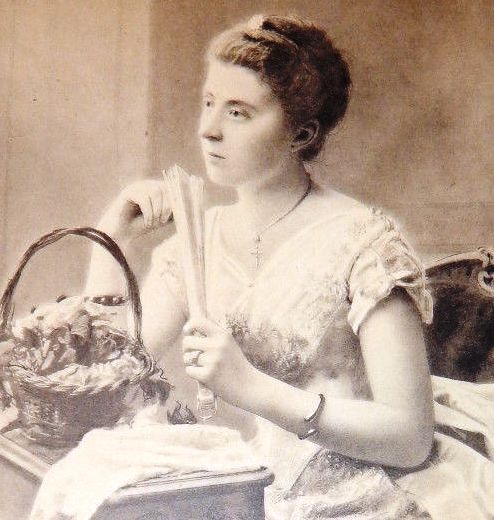
Almina and Victor at Highclere, 1895

Almina Wombwell,  the 5th Countess of Carnarvon (1876-1969)  was born in London on 14 April 1876, but her birth was not registered in England until four years later.  Christened Almina Victoria Marie Alexandra Wombwell later Herbert, finally Mrs Dennistoun, she termed herself Almina, Countess of Carnarvon.  Her mother was a pushy  Frenchwoman, her father probably English. Almina’s childhood was spent among the decaying vestiges of  the old French and Spanish  aristocrats living in exile.  Almina grew up in Paris, spoke fluent French and was later a debutante in the London Season of 1893.  She lived and loved for nine decades – married the 5th Earl of Carnarvon in 1895 and then the caddish Lt. Col Ian Onslow Dennistoun in 1923. Lord Carnarvon died in 1923 (in Egypt). Ian died in 1938 (in London). Almina was chatelaine of Highclere Castle (the back drop to TV’s Downton Abbey)  from 1895 until 1923. Every inch a Countess,  Almina spent a King’s ransom and died a horrendous death in Bristol in 1969.

Victor and George Carnarvon at Highclere, 1895

Prince Victor Duleep Singh (1866-1918) was born in London on 10 July 1866. He was the grandson of Maharajah Ranjit Singh of Lahore, the Lion of the Punjab and the founder of the great Sikh empire.   Victor’s father was also  Maharajah of Lahore, although he was brought up as an English gentleman, as was Victor.  The Duleep Singh family history is one that highlights the “horrors” of the British conquest of India. The prized  Koh-i-Noor diamond   was one of the Duleep Singh assets seized by Queen Victoria’s agents.

With his handsome half-Indian, half-European appearance,  his mother Bamba Muller was of German- Abyssinian descent, Victor (nick named ‘Tulip’) stood out as an attractive male figure in Society circles in  Victorian/ Edwardian days, he died in Monte Carlo in 1918.  Educated at Eton College, Cambridge University &  Sandhurst Miltary Academy, Victor’s closest life  long friend was George Herbert, 5th Earl of Carnarvon, who married Almina Wombwell in 1895. George and Victors’s  youth and early adulthood were of the playboy type,  wild &  irresponsible, they were gamblers, risk takers. George’s health was blighted, leading to consequences that endure  for the Carnarvons to this day.   


Almina and the Carnarvon Heir, Henry, Lord Porchester, at Highclere 1899
                                                          

A secret truth –almost a curse- links the Countess Almina and the Maharajah Victor together,   a  legacy within  the  British Peerage  exposed in books and in a recent TV documentary.  William Cross, FSA Scot ( biographer of Almina),  was first to reveal the secret in his book “ The Life and Secrets of Almina Carnarvon” ( 2011).  In this talk Cross offers some of the latest evidence from his researches that still sends ripples through High Society.  In 2022 Will added further analysis of the whole story in his book “ More on Prince Victor Duleep Singh and the Curse of the Carnarvons : The Final Twists”.

 NB Will’s latest book is “ Lies, Damned Lies and the Carnarvons” issued for last year’s centenary of the discovery of Tutankhamun in 1922. 

Will Cross is a retired civil servant, writer & lecturer based in Newport, South Wales.  He is  the author of several books on Scottish history, on the Carnarvons of Highclere Castle, on Tutankhamun, and many on the Morgans of Tredegar House, Newport. Will  has had a long standing interest  on Society scandals and cover ups in the British aristocracy. Contact Will  directly about his books, talks etc,  at  58, Sutton Road, Newport, South Wales, NP19 7JF.  


E-mail Contact Welcome

willicross@aol.com


The  weeping figure of Almina,  in black, at the grave of Prince Victor Duleep Singh every summer at Monte Carlo.

“It was a duty undertaken out of respect and regard & perhaps a token of her love”   

The Story Has Not Ended…..


Photographs reproduced  by permission of the family of the photographer J W  Righton of Newbury, Berkshire


Thursday, 29 December 2022

Lady Winifred Burghclere and her Troublesome Daughters By William Cross, FSA Scot


Lady    Winifred    Burghclere  
And   her   Troublesome   Daughters
Four   Immoral   Tales   From   The   Roaring  Twenties


NEW BOOK  : NOW AVAILABLE 

FROM THE AUTHOR WILLIAM CROSS, FSA SCOT 


SYNOPIS


Winifred Burghclere  was  the  clever   sister of the Lord Carnarvon who discovered Tutankhamun, a biographer of Restoration toffs  and lady of letters. Her early years  were  spent at Highclere Castle, the back drop to TV’s ‘Downton Abbey’.    


Her widower father, the 4th  Earl, a Cabinet Minister   made her his private secretary, Winifred learned early on how to keep secrets. Twice married she produced four lively, racy daughters from her second  marriage to the quixotic Herbert Gardner,  an actor playwright who turned to politics, a former  Liberal Government Minister  he was raised to the peerage.


A stickler for rules, duty and  old world  values  Winifred completely hemmed her daughters in,  they  were kept under their mother’s grip, bullied, isolated  and schooled by governesses. The girls   were named  Juliet,  Alathea, Mary and Evelyn Gardner,  each had a long string of  other forenames. They  began as  a peculiar  mix of  the prudish and  moral,  “as  naive as nuns “,   then  became  the complete  flip  side of this,  amoral, and unconventional, hence troublesome.


The  Gardner  girls’ rebellious period  overlapped with  the Great War and its aftermath into the Bright Young Things era and the roaring twenties. Each of the  girls had disastrous  marriages  albeit with  interesting men  like Geoffrey Fry  a member of the Fry’s chocolate family,  he  was  Private Secretary to several Prime Ministers and married the  very disturbed slim, boyish,  Alathea. The youngest Gardner daughter Evelyn  was the first wife of  Evelyn Waugh,  the  writer  of  Scoop and Brideshead Revisited  who  pop up in the infamous ‘ He-Evelyn-She- Evelyn’ partnership.


In this tale of  aristocratic snobbery,  scandal  and love  William Cross  ( author of several books on the Carnarvons of Highclere Castle ( Downton Abbey) ) offers a quaint  blend of  exciting, amusing,  shocking tales, unearthing  the inevitable  excesses, casualties and  horrors  of   the era’s pleasure domes  of night club frolics,  themed  dances,  crazy parties and drink, drugs and sex fuelled  romps   on the  London scene : all of which  forced four ‘poor little rich girls’ to  quickly grow up and face the consequences of their actions.  


FOR MORE BACKGROUND DETAILS  GO TO THIS LINK BELOW

https://lady-winifred-burghclere.yolasite.com/details-of-lady-burghclere-and-daughters.php


ISBN 10 1-905914-41-5   ISBN 13 978-1-905914-41-8     

Published by  Book Midden Publishing c/o William . Cross,  58 Sutton Road  Newport  Gwent   NP19 7JF   United Kingdom 


MORE INFORMATION  AVAILABLE DIRECT FROM THE AUTHOR    


email WILL CROSS


williecross@aol.com


Tuesday, 6 September 2022

Lady Burghclere, Sister of Lord George Carnarvon of Tutankhamun Fame

 William Cross, FSA Scot considers  Winifred, Lady Burghclere, Sister of Lord George Carnarvon of Tutankhamun Fame 

Winifred Anne Henrietta Christiana Herbert (1864-1933), best known as Lady Burghclere was the bookish older sister of Lord George Carnarvon of Tutankhamun fame. To make certain her brother’s less noble life was relegated to the long grass Winifred quickly and smartly appointed herself his chief protector on earth when she stepped into the shoes of making herself his earliest biographer and champion. All comers thereafter writing anything of his Lordship’s unhealthy, chequered life and times have been muted and left in the shadow of Winifred’s elegantly drafted gloss- over.
In 1923, some months after Lord Carnarvon died  in Egypt in a famous death scene at the Continental Hotel Cairo, Lady Winifred ( by then a widow, with two husbands down) left her London home at Green Street, Park Lane to spend the autumn at the beautiful Lake House at Burghclere, this close proximity to the old family’s seat at Highclere Castle ensured exactly the right setting for literary inspiration and mendacity.
In the wake of Howard Carter and Arthur Mace publishing the first volume of their narrative on the discovery of Tutankhamun, Winifred had agreed to write an Introduction to the book about her beloved brother Lord Carnarvon. 

This long tirade secured a pre-emptive strike, a glamorous, orchestrated sketch before any one else could or  ever would effectively sum up his life. It's content has woven a damaged, flawed chronology as it had been used as gospel by a successive line of history vandals at Highclere Castle to suit their own ends.
It had been a difficult year since Winifred's accomplished half-brother the Hon. Aubrey Herbert, dubbed ‘ The Man Who Was Greenmantle’ died in a London nursing home on 16 September, 1923 aged 43. Aubrey had been an adventurer, soldier and politician, he was one of his sister- in-law, Almina's early crushes. Almina ( Carnarvon's wife) always preferred the gallant but caddish Aubrey to the creepy Lord Carnarvon, he [ Aubrey] had been her patient to nurse first hand at Highclere Castle ( when a military hospital) during the Great War. After a series of botched operations to improve his sight, Aubrey’s doctors missed a serious underlying health condition, he suffered a ruptured gall bladder and bled to death. Almina always said Aubrey was her lost love, she campaigned for him in Somerset to help him win a seat in Parliament.
Grieving for two siblings Winifred sought seclusion and quiet solitude, writing proved the restorative she needed.
As there was a good deal to hide from the public’s knowledge about Lord Carnarvon’s life, death, proclivities and foibles. Winifred ‘s tribute to him had to be manipulated. She records with great laffection, respect and dignity things she uniquely felt ought to be said but as the whole of the language used is floral and full of terminological inexactitudes its effect was to scorch the truth as seen by others. There were those who knew the real Carnarvon, a sad man tormented by demons who snarled, bullied and never smiled. One witness for the prosecution was a woman whom Winifred detested but who was eminently qualified to contradict her slick treatment on the subject of the Earl, when or if provoked. This onlooker was Almina Wombwell, Carnarvon’s lusty widow, who, although no angel, endured almost 30 years humiliation in a loveless, sham marriage to the 5th Earl of Carnarvon in a commercial deal brokered by the banker Baron Alfred de Rothschild.
Speaking of Lord Carnarvon Almina told her godson Tony Leadbetter that
 “ all his sisters knew him for being irksome ....he was always shouting at them. My dear husband was moody, he was hell to live with and put his own pleasures first” Almina added “ I was always afraid of him, and so was Howard Carter ”. Carter was less forthcoming in public about the man who as his patron with whom he was often badly treated and ridiculed. As a character who regularly recoiled and bit out at friends and foes he took his Lordship's ear bashings with few back comments.
Winifred Burghclere knew of this too and what family face was saved in her homage, she would not admit to having a wayward brother nor come clean on Almina’s marriage charade or Carter's snipes. 

Lady Burghclere was an experienced scribe, the author of a number of well received yet obscure biographies featuring the exploits of past English noblemen ( as above in her book on George Villiers, Duke of Buckingham) she set their histories in a overly romantic as well as the historic mould. As with in her tribute to Lord Carnarvon, Winifred’s aim was to make her writing convincing; one obituary writer observed that she had style, and “ had edge, but with no acerbity or malice”. 


“Biographical Sketch of the late Lord Carnarvon by Lady Burghclere"
first page of pages 31-72 of the book below:

"The tomb of Tut-ankh-Amen, discovered by the late Earl of Carnarvon and Howard Carter; by Howard Carter and A.C. Mace...." ( 1923)


This article is an update on a previous Blogger posting in 2016.

ANY QUERIES CONTACT THE AUTHOR OF THIS PIECE BY EMAIL


williecross@aol.com


The book " Lady Winifred Burghclere and her Troublesome Daughters", withheld from wider circulation is now available from the Author William Cross, FSA Scot


FURTHER READING

"Lies, Damned Lies and the Carnarvons" 

By William Cross, FSA Scot

A NEW BOOK

Published 1 September 2022

AVAILABLE DIRECT FROM THE AUTHOR

BY EMAIL CONTACT, BELOW


williecross@aol.com


Wednesday, 3 August 2022

Prince Victor Duleep Singh and Lord George Carnarvon : A Romantic Friendship

A Romantic Friendship

Prince Victor Duleep Singh 
and 
Lord George Carnarvon 


At the heart of this story is a “romantic friendship”.

This  is an old Victorian term for a special connection of friendship, usually between two men or two women.

It may or may not have a sexual [carnal] connotation; it can be physical and/or emotional and may border on a deeper, profound love. Between two men it is often referred to as being  “platonic” [i].

There was certainly much more than an ordinary friendship in the constancy between  Prince Victor Duleep Singh ( nicknamed  ‘Tulip’)  and  George  Carnarvon, starting from when George was Lord Porchester (nicknamed  ‘Porchey’), the Herbert ( Carnarvon /Highclere)  heir in waiting as the 5th Earl. 

Victor was also the heir to his father’s title of Maharaja of Lahore, although he never  subsequently claimed that style of name or address after his father died in 1893. Victor adored his mother’s family in Egypt, he never understood his father and his wrath against Queen Victoria, but was proud of their Indian roots.

The closeness and fondness of Porchey and Victor ran through as pre-pubescent boys  from their Eton College schooldays in the early 1880s until Victor’s death in 1918.

There were deeply felt  emotional needs they both had that was satisfied from the other in a rare devotion that endured for almost 40 years.

The two of them found a means of survival as dubbed “odd balls”[ii], bullied by their fathers, with often distant mothers, and  mocked by their peer group. It was a union with one another that was unbreakable.

Later they travelled the world with privacy assured on board Porchey’s yachts. They often hid away at Bretby Park, a property in Derbyshire that Porchey inherited in 1887 (upon his  coming of age, of  21). The two of them spent long periods of time there, enjoying lots of sport, especially shooting, with only a few trusted retainers to wait on them hand and foot.

After Porchey became Lord Carnarvon (from 1890) and married Almina Wombwell in 1895, Victor remained an unvarying presence in the lives of the Carnarvons.  His Lordship’s love for his best friend was unfailing.  Almina  accepted that love and she came to tolerate their closeness, and, in time,  grew fond of  Victor.  He was always at their side, or on call, he held the Carnarvon’s peculiar marriage together, and, is, almost certainly,  the 6th Earl’s father.

The  books published  by the 6th Earl and the  present day Carnarvons  are tardy and economical with the facts about Victor.  Others too  have missed the point. The point is  simple.  This is  overwhelming a  story of the love between  Tulip Singh and Porchey Carnarvon.

The Carnarvons  may owe Victor their continuity. But the Herberts go no further than  acknowledging that Victor was a regular visitor to Highclere  Castle – as  he is often in the Castle’s Visitors Record. 

They add a few unexceptional anecdotes of him as a great sportsman and the godfather of the 6th Earl (as Lord Porchester) from 1898. The memoirs of Henry, the 6th Earl, whilst proclaiming his mother Almina’s alleged illegitimacy (as the daughter of Alfred de Rothschild), withholds the real truth of his own illegitimacy that he knew, as Almina told him all about Victor. [iii] 

It is a bad reflection that the truth  continues unsaid  of Victor’s role in sustaining the advance of  the Herbert family; it is because it  remains a curse.[iv]


THIS IS AN EXTRACT FROM A NEW BOOK BY WILLIAM CROSS

MORE ON PRINCE VICTOR DULEEP SINGH 
AND THE CURSE OF THE CARNARVONS

PUBLISHED  4 AUGUST 2022


Enquiries : Contact the Author, William Cross, FSA Scot


[i] This concept originates in the ideas of the ancient philosopher Plato, from whose name the term is derived.

[ii] Tony Leadbetter Interviews 2009-2019.

[iii] Ibid.

[iv] See the book by William  Cross “Prince Victor Duleep Singh and the Curse of the Carnarvons” Book Midden Publishing. (2019).


Thursday, 24 November 2016

PRESS RELEASE BY AUTHOR WILLIAM CROSS, FSA SCOT


BRITISH  SOCIETY AUTHOR REVEALS SHOCKING FACTS ABOUT  ITV’S TUTANKHAMUN CHARACTERS CARNARVON AND CARTER

Shocking Facts In New Book On Lord Carnarvon And Howard Carter who featured in a recent  British Television Drama Series  “ New Tutankhamun “

The book features untold facts about  Lord Carnarvon, and his side kick Howard Carter, the discoverers of the tomb of Boy King, Tutankhamun.

The Book strips away the conventional story to look at their disturbed childhood.

British Society Author William Cross, FSA Scot    offers a new book "Carnarvon, Carter and Tutankhamun Revisited :The hidden truths and doomed relationships" .

The book  reveals new, touching facts about the early life of the men behind Tutankhamun's discovery. The book also advances to the great find itself and the ultimate fate of the two discoverers.

Suggesting that " Everything we are is shaped in childhood", often resulting in a dysfunctional adult, the book highlights the co-incidences of major childhood trauma suffered by the central figures. At aged 9, Prince Tutankhamun found himself King of Egypt, Lord Carnarvon lost his beloved mother, who was soon replaced by a young step mother. Carter's case is the most shocking, at aged 8 he witnessed the suicide of his elder brother Horace, a promising 17 year old who killed himself by drinking cleaning fluid.

All were products of inbreeding, thus the three figures were not surprisingly born disabled, Tutankhamun had girlish hips, a club foot, he was possibly a consumptive or epileptic. Carnarvon was a sickly child with bad genes, lung disease and learning difficulties, at Eton College he was already an insatiable gambler. Carter was "a bad herniary case" who had to be "bandaged like a mummy" so frail that parts of his body fused, he was unable to go to school, do any sports or play games with other children.

Echoing the hunchback King Richard III who in his pains and woes complains at being "deformed, unfinish'd, sent before my time into this breathing world, scarce half made up" Carter uses a similar phrase for himself, that "Nature thrusts some of us into the world miserably incomplete".

As babies none tasted their mother's milk, but were fed by wet nurses. Carnarvon's wet nurses were hired as nursery maids as roughneck as the estate gardeners. Carter's wet nurse was a female cousin from Swaffham in Norfolk, a Carter family stronghold. In the case of Prince Tutankhamun archaeologists have traced wall paintings of his wet nurse Maia feeding him, she is thought to be his sister.


 Wet nurses were employed when the mother was unable or chose not to nurse the child herself. Lady Evelyn Herbert of Highclere Castle ( backdrop to TV's Downton Abbey) was a political hostess for her Cabinet Minister husband, hers and Martha Carter's lives ( as the wife of a Royal Society Artist) were too full of social activity to breast feed; Tutankhamun's feeding was set by ancient Royal custom.

The author concludes that Howard Carter suffered a form of autism, his mother Martha was a classic 'refrigerator mother' ( one of the early recognised causes of autism, although it is now thought the condition is more genetically driven). Autism accounts for Carter's mood swings, furious temper and tantrums famously after the affray with French tourists at Sakkarah in 1905 after he lock up Tutankhamun's Tomb in 1924 and refused everyone entry.

The Author makes a number of controversial assertions. Based on information from correspondents, including Tony Leadbetter, the godson of Lady Almina, Carnarvon's wife, ( who lived with the Countess of Carnarvon for 30 years ) he revisits the facts about the famous death of Lord Carnarvon in 1923. The evidence suggests that the Earl was suffering from a terminal illness, there was no mosquito bite. Almina, Lady Carnarvon ( a nurse in the Great War) rushed to the Earl's bedside ( from England, with a mysterious doctor) and almost certainly assisted a peaceful end.

The book examines the development years and private world of Lord Carnarvon and Howard Carter closely scrutinising their relationship. In revisiting the story of the discovery of the Tomb and the aftermath the Author challenges the conventional claims of how and why Lord Carnarvon first turned his attention to Egyptology, to Carter's years in the wilderness after resigning as an Inspector in the Antiquities Service and why Howard was blocked for a knighthood by King George V.

William Cross comments on the ITV's Tutankhamun : " ITV have rattled the history and chronology of Howard Carter and George Carnarvon. It is not about artistic licence or an interpretation of the story as this series is largely FICTION based on using the historical figures and underlying narrative of whose who discovered Tutankhamun's tomb. In such fiction no one can hear the historians scream because someone, somewhere perhaps for a school exam puts down the fiction from TV over the facts from a history book If this series wishes to be judged as history it is a non-starter, it fails as an historical account. So close to the centenary of the discovery of the Tomb it is a missed chance and telling the story without embellishments."
  
“Carnarvon, Carter and Tutankhamun Revisited :The hidden truths and doomed relationships” by William Cross ( published on 20 October 2016 by Book Midden Publishing, Newport, Gwent), ISBN 978 1905914364

Further Enquiries: Contact William Cross by e-mail. 

Google " William Cross FSA Scot"